Friday, April 17, 2015

Home Buying: The Features You Want vs. the Features You Need

Have you determined what features your new Orlando home absolutely must have?

Often, buyers approach the home search without a clear idea of what they're looking for. They think "they'll know it when they see it" so spend a lot of time viewing homes that just won't do. Others have a long list of "wants" and become frustrated because no one home offers all of them.

Save yourself time and streamline your home search by making two lists. The first is for those features and benefits that your new home absolutely must offer.

For instance, you might work from home and require an office or an extra bedroom to turn into an office. Put that on the list. You might be a gourmet cook and would be miserable without extensive counter and storage space in the kitchen. Put that on the list.

You might be a musician and own a grand piano – your list needs to note that you need a room large enough to accommodate that piano.

Once your list is made, share it with me. Using it, I can narrow our search to homes in Central Florida that meet your most important requirements.

Next, make a "nice to have" list.  These are the features and benefits that appeal to you but aren't absolutely vital. For instance, a bay window, cathedral ceilings, or a river rock fireplace.

After we’ve eliminated the choices that won’t work, we’ll have a list of possibilities that match your “must have” list - and can focus on viewing homes that include the items on your “nice to have” list.

Once we begin viewing homes together, we can further refine the search by paying attention to how you feel about the details in each home. You might notice features that you hadn't thought of before and want to add them to your list.

Paying attention, sorting through the listings, and saving you time in your home search are some of my functions as a buyer’s agent. Your lists will help that process go smoothly. 

The Value Of Your Agent's Reputation

When you choose a real estate agent to help you buy or sell a house, you probably don’t think very much about his or her reputation in the real estate community. But it is important to your success either in buying or selling. Here’s why:
Most of the time, the agent who lists a home or land will not be the same agent who brings a buyer. In fact, in some agencies, it is against company policy for one agent to work with both the buyer and the seller in a given transaction. That’s why cooperation and trust between agents and agencies is vital.
For Sellers:
When your listing agent has a reputation for dealing fairly with buyers' agents, those buyers’ agents will be more eager to show your home.
To maintain a good reputation, your listing agent must:
  • Return all phone calls from agents – either with questions about the home that aren’t answered in the MLS information or with requests to show
  • Make it easy to show your home – preferably with a lockbox and through convincing sellers that it is unwise to restrict times and days when a home can be shown.
  • Enter complete and accurate information in MLS – Some agents leave blank spaces and even enter incorrect information.
  • Keep MLS information up to date, especially with regard to homes under contract. No agent wants to take time to arrange a showing on a home that is already under contract.
  • Present all offers fairly and quickly. Some agents have a reputation for holding on to offers from competitors while they attempt to get an offer from their own buyers – it’s illegal, but some do it.
  • Present counter-offers within the time limits specified in the offer
  • Present complete counter-offers – no blanks left unfilled and open to questions. 
  • Cooperate with buyer’s agents when its time to arrange inspections, and throughout the closing process
  • Communicate. Short sale transactions can take many weeks or months to negotiate with the banks – buyers and their agents want to know what progress is being made, so it’s good for the listing agent to communicate regularly.
  • Be polite. Such a simple thing, and yet some agents are simply rude to other agents.
When listing agents develop a reputation for failing in any of these respects, buyer agents try to avoid showing their listings. They may get there eventually, but only if the buyer has specifically asked to see the home, or after they’ve shown all the properties listed by agents who are pleasant to deal with.
For Buyers:
While all agents will allow even an agent with a bad reputation to show their listings, an agent’s bad reputation can harm their buyer’s chances of a successful purchase.  This is especially true in situations with multiple offers on a home. But in any case, if a listing agent has had a few bad experiences with a certain buyers’ agent, he or she will warn the seller to be wary.
To maintain a good reputation, a buyers’ agent must:
  • Be on time for showings…or call if there’s an unavoidable delay. This may not harm chances once an offer is made, but raises a question about how the agent will conduct business throughout the transaction.
  • Work with pre-qualified buyers. When listing agents know that a buyer’s agent doesn’t require pre-qualification, their offers get shifted to the bottom of the pile. No one wants to tie up a listing on an offer with low probability of closing.
  • Present complete offers. There can be no questions caused by spaces left blank.
  • Respond to counter-offers on time
  • Complete inspections and other contingencies on time
  • Behave reasonably after the inspections. Some agents routinely use this period to begin re-negotiating the price – even if the inspection didn’t reveal expensive problems.
  • Communicate willingly – keeping listing agents in the loop regarding the buyer’s loan process, any anticipated delays, etc.
  • Be polite –  Again, it matters if an agent is pleasant to work with.
Reputation matters in all areas of life, but in real estate it can affect results for buyers and sellers – not just the agent.

Tuesday, February 17, 2015

What do shoes have to do with selling a Central Florida home?


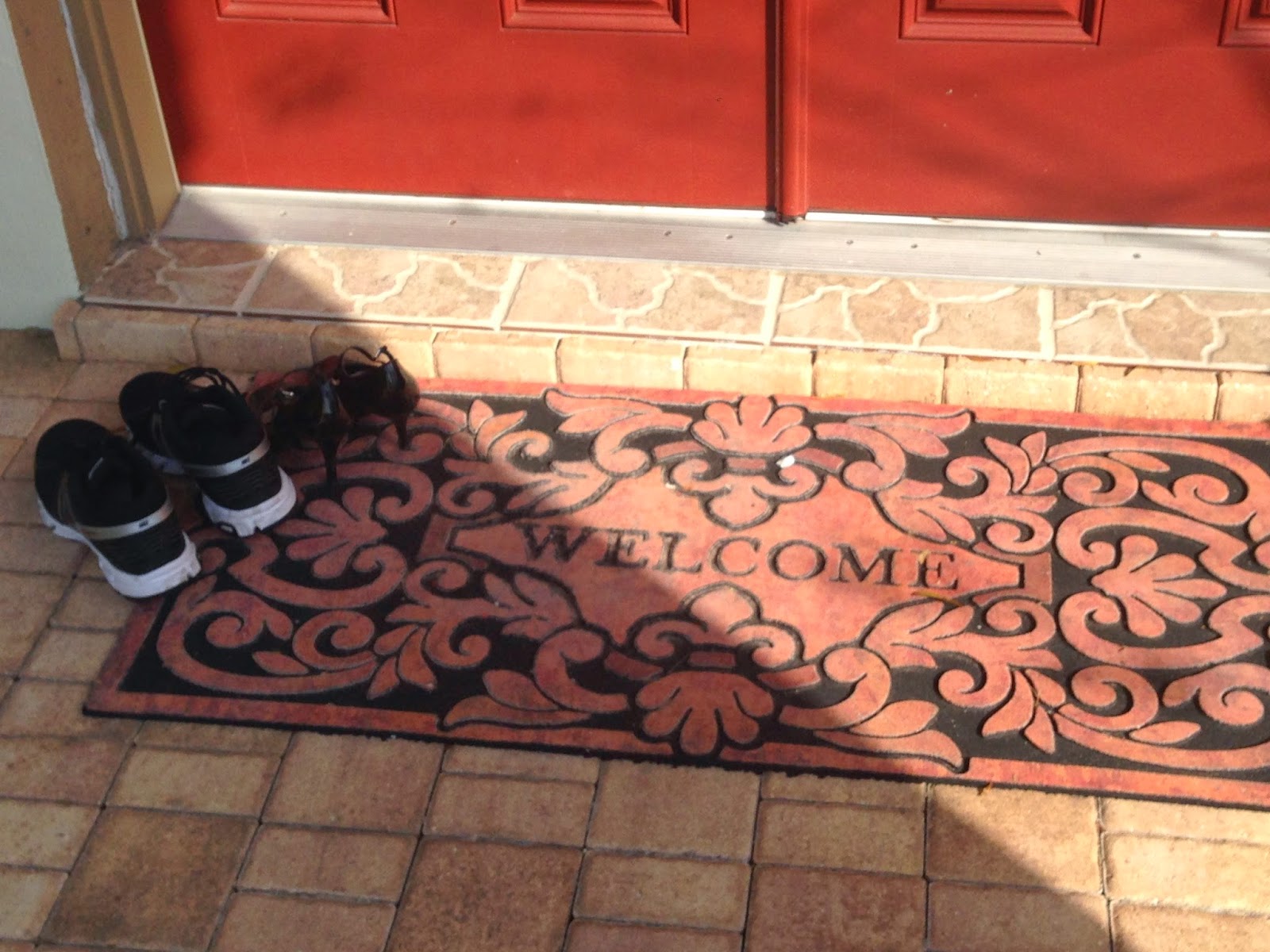
As it turns out, shoes – and whether or not they should be worn into the house - can have a significant impact.

Some sellers are horrified at the idea of people coming into their home wearing shoes – others are horrified at the idea of "someone's sweaty feet" leaving prints on the hardwood or soiling the carpets. Of course, some don't care one way or the other, but buyers and their agents have no way to know which is which unless the listing agent makes good notes – and the buyer’s agent reads those notes.

Sellers aren't the only ones who have an opinion. Some buyers simply refuse to view a house if they're expected to remove their shoes. For others, removing shoes presents a physical barrier – think of someone who wears orthopedic shoes or braces, or who needs a shoe horn to get their shoes back on.

At the same time, there are buyers who won't consider a home where "people care so little that they let visitors walk around in shoes.”

What's the answer? Booties. Sellers who want to protect their floors should provide a box of booties and a sturdy chair at the entrance door. But since not all do, I carry a few in my car for those occasions. 

So have no fear, when you search for a Central Florida home with me, you won't be required to remove your shoes.

Monday, January 26, 2015

Orlando Ranked #4 In Best House Markets For 2015

Forbes.com crowned the following 10 housing markets as 2015's Best Buy Cities:
1. Austin, Texas
  • Average home price: $261,923
  • Annual price growth: 12%
  • Population growth (2010-2013): 8.9%
  • Annual job growth: 3.6%
2. Provo, Utah
  • Average home price: $211,273
  • Annual price growth: 6%
  • Population growth (2010-2013): 6.2%
  • Annual job growth: 3%
3. Houston, Texas
  • Average home price: $214,049
  • Annual price growth: 12%
  • Population growth (2010-2013): 6.2%
  • Annual job growth: 4.1%
4. Orlando, Florida
  • Average home price: $187,568
  • Annual price growth: 9%
  • Population growth (2010-2013): 6%
  • Annual job growth: 9%
5. Dallas, Texas
  • Average home price: $197,159
  • Annual price growth: 10%
  • Population growth (2010-2013): 5.9%
  • Annual job growth: 3.8%
6. San Antonio, Texas
  • Average home price: $189,080
  • Annual price growth: 8%
  • Population growth (2010-2013): 5.8%
  • Annual job growth: 2.5%
7. Denver, Colo.
  • Average home price: $278,130
  • Annual price growth: 10%
  • Population growth (2010-2013): 5.6%
  • Annual job growth: 2.6%
8. Boise, Idaho 
  • Average home price: $183,649
  • Annual price growth: 9%
  • Population growth (2010-2013): 5.3%
  • Annual job growth: 2.2%
9. Oklahoma City, Oklahoma
  • Average home price: $166,044
  • Annual price growth: 4%
  • Population growth (2010-2013): 4.8%
  • Annual job growth: 3.3%
10. Fort Worth, Texas
  • Average home price: $180,312
  • Annual price growth: 7%
  • Population growth (2010-2013): 4.8%
  • Annual job growth: 2.6%
Source: "Best Buy Cities: Where to Invest in Housing in 2015," Forbes.com (Jan. 9, 2015)

There's More To A Central Florida Home Purchase Offer Than The Stated Price

While the stated purchase price of a home in Central Florida is the starting point in an offer to purchase, other details of the offer determine the true costs to the buyer and the true proceeds to the seller. These details, along with the price, become points of negotiation.
The most obvious, common, and costly detail is the request for the seller to pay some of the buyer's closing costs. Depending upon the loan program, this could equal as much as 9% of the purchase price.
On a home valued at $300,000, paying buyer's closing costs would mean a $27,000 reduction in proceeds for the seller - and a $27,000 savings for the buyer.

Then there are the inspections and the repair allowances. Buyers usually pay for the inspections, but they can ask the seller to pay these costs. If you request the seller pay for the inspection, the seller may agree but with terms that they (or their agent) choose the inspector.

Sellers usually request offers be made on the Florida Association of Realtors AS-IS contract.  The seller is not responsible for any repairs in the inspection and therefore usually agreeing to their lowest price. As a buyer, expect some repairs.  If the repairs are over 1.5% of the contract, the seller may agree to a reduction in price or credit at closing for a portion of the repairs.

But those aren't the only factors that can affect the buyers' or the sellers' finances.

Timing can also play a role. If the buyer is leaving another home or the seller is buying a new home, the closing/possession date can save or cost them dollars. Think of the cost of putting your household furnishings into storage and renting temporary shelter in the interim between closing on one home and moving into another.

Next, look at what's included in the purchase price. Kitchen and/or laundry appliances may already be included per the listing. If not, the buyers can ask for them. Inclusion saves the buyers money, while it may cost the sellers to replace them in their new home. So even though these items are not given monetary value on the purchase offer, they do have value that both parties need to consider.
The same is true for items like a riding lawn mower. The seller may not need one in their next home, but leaving it behind does add value for the buyer.
Whether you're buying or selling a home here in Central Florida, before you focus on the stated purchase price, look at the true price. You'll see it after you make the additions and subtractions.

If you have questions about these costs and how they affect your bottom line, call me at 407.274.8476 or drop me a note at cathy@jerrybarker.com. I'll be happy to speak with you.
And when you're ready to buy or sell a Central Florida home, it would be my pleasure to guide you through a smooth transaction.  I cover Orange, Osceola, Polk, Lake and Seminole counties.

Friday, September 5, 2014

I'd like to rent my property short term in Orange County, what restrictions apply for zoning?

A very small section of Orange county is zoned for STR (around Disney and I-Drive/Sea World) and they are typically condo-hotel in nature. There are larger areas zoned for STR in Osceola and Polk county.  Be sure to work with an agent who specializes in the STR market.  Not all communities which are in the STR zone allow short term rentals.  HOA's can have themselves removed from allowing STR's. Long term rentals are 7-12 month leases (and many HOA's require a 12-month lease).  Short term does not have a limit on the minimum number of days a guest is allowed.  However, most short term rentals prefer a minimum of 3-night stay.  If you'd like to know what's available in the STR zone and fits your criteria (size/price/amenities), feel free to reach out to me for assistance.